Traditional Karate
Weekly Newsletter • 3 May 2026
Weekly Update from Wadō-Ryū Benkyō
Hello,
Welcome to your 21st Weekly update from Wado-Ryu Benkyō, here is what you will find below:
🥋 1. Sunday Benkyō Course Review
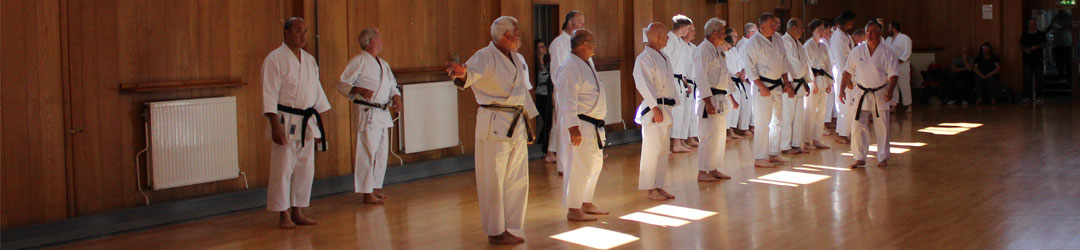
Sunday Benkyo Course – YMCA, 3rd May 2026
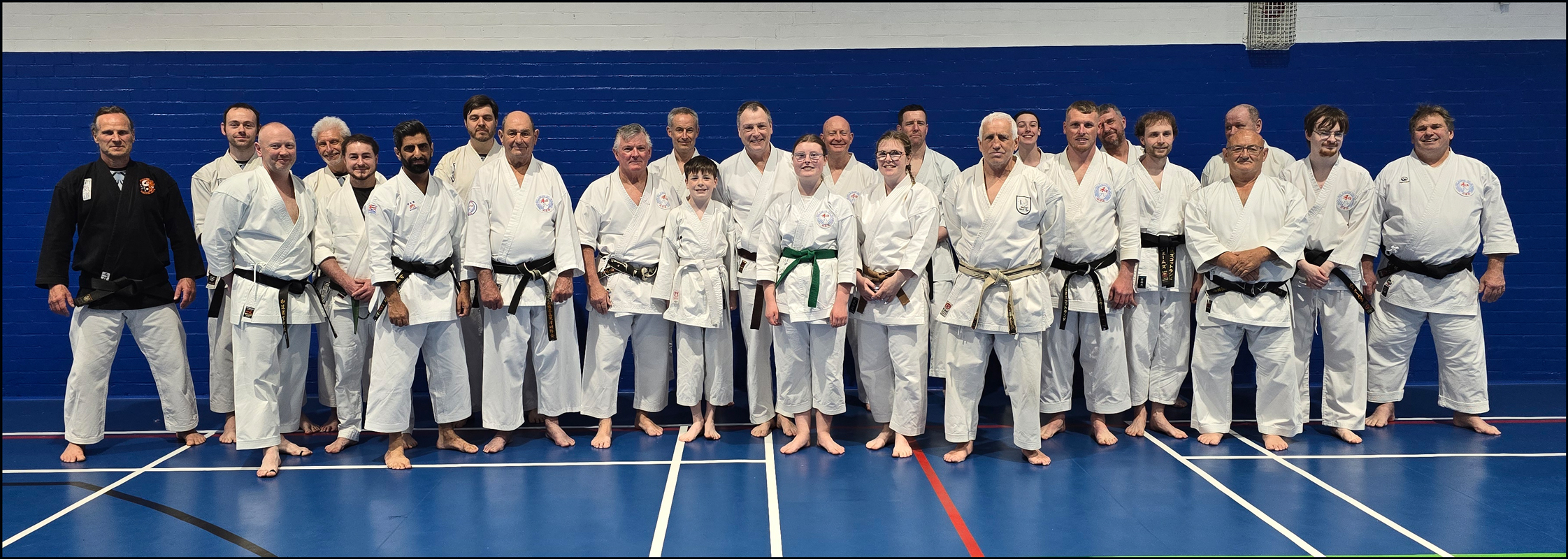
A fantastic turnout for the course, and it was especially good to welcome some new faces alongside old friends and colleagues.
The topic was an ambitious one to explore in just two and a half hours, and the delivery was open, honest, and reflective—centred on where we each stand on what is ultimately a lifelong journey of study and practice.
The focus of the day was the vital role of the mind in training, something that is often treated as an afterthought compared to the physical aspects of practice and sparring.
We began with a brief introduction to key martial mind concepts: Fudōshin, Zanshin, Mushin, Shoshin, and Senshin. These ideas underpin every aspect of martial arts training. At the beginning of our journey, they can feel separate from physical technique, but over time they begin to overlap, like a Venn diagram, until, for some, they become fully integrated as one.
To explore this, participants paired up and were asked to observe and sense their partner’s ability and intent simply through watching.
Sensei encouraged everyone to work with someone unfamiliar, increasing the challenge. Starting from a relaxed state, partners adopted a fighting stance and gradually closed the distance, moving from outside range into kicking distance, and then into punching distance. It became clear from reactions around the room that many were naturally able to tune into this awareness when prompted, even though it is often overlooked in everyday practice.
Building on this awareness, the next step was to identify the very moment an attack begins. Using Sen Sen no Sen, participants called out as soon as they perceived the initiation of movement.
From there, we progressed to responding, defending at the moment the attack was felt. To provide a common framework, we used Kihon Kumite No. 1. The aim was not simply to block, but to control and guide the attacker, allowing them to feel free in their attack while subtly directing the outcome. Concepts such as Ma-ai, Mushin, and elements of Fudōshin became central to this exploration. It proved to be a challenging and thought-provoking exercise, and one that many will no doubt carry into their future training.
To consolidate this section, we examined the mechanics of Kihon Kumite No. 1 in more detail, how the body shifts slightly off-line, how the hand deflects with minimal effort, and how opening the body creates both time and space.
For the second phase, attention turned to how the body drops and how the hips and structure drive the final position and technique.
Once this became more fluid, we introduced an additional layer by incorporating a Jujutsu element, exploring how the same principles apply when responding to a grab rather than a strike. This challenged everyone to adapt their movement in a new context, but it quickly became apparent that the underlying principles were beginning to take hold.
Remarkably, two hours had already passed at this point, but the session was far from over.
Attention then shifted to the role of Uke. If Tori can control the attack, how does Uke regain the advantage? One method discussed was “cheating” distance. Sensei demonstrated how subtly advancing the knee can close the gap without telegraphing intent, but this is only part of the equation.
To truly regain initiative, something far less visible is required. We explored how the internal musculature of the hips and abdomen can generate tension and torsion, contributing to both speed and power. Extending this into the second attack (chūdan gyakuzuki), we examined how Ryūsui and Shizumu allow for rapid changes in direction and angle. To further conceal intention, the first arm remained in place, obstructing Tori’s line of sight and masking the movement of the second attack.
The result was a striking demonstration of speed, precision, and effective application, offering much for participants to reflect on and develop in their own practice.
Before we knew it, the full two and a half hours (and a little more) had passed, bringing another excellent course to a close.
Videos from the course will be available on the YouTube channel in the coming weeks. For those who were unable to attend, we hope these will provide an opportunity to engage with the material and benefit from the session.
Saturday Benkyō sessions to run throughout May 2026 - but there will be no training Saturday 23rd May. If you would like to attend a Saturday session for the first time reply to this email and let us know and check the events calendar for future session dates.
🎥 2. This Week’s Long-Format Video
Kihon Fundamentals Volume III
1 hour 44 minute full video

In Volume III of our Kihon Fundamentals series, we continue refining the core principles that underpin effective Wadō-Ryū Karate.
Led by Roger Vickerman Renshi (7th Dan), alongside Kerry Moore and Kash Bansal, this session moves beyond isolated technique, focusing on how Kihon principles come alive through movement. Emphasis is placed on posture, timing, balance, and the connection between techniques.
Key themes include:
- efficient body alignment and power generation
- the balance between relaxation and tension
- smooth transitions between techniques
- awareness of distance (ma-ai) and timing
Rather than treating kihon as repetition, this volume highlights it as a living practice — developing movement that is natural, connected, and functional. A valuable session for anyone looking to deepen their understanding of Wadō principles, whether progressing through the syllabus or refining fundamentals at a higher level.
📝 3. Featured Article of the Week
Ippon Kumite No.7 – Nanahonme
A study in hip generation, continuous striking, and collapsing structure through connection
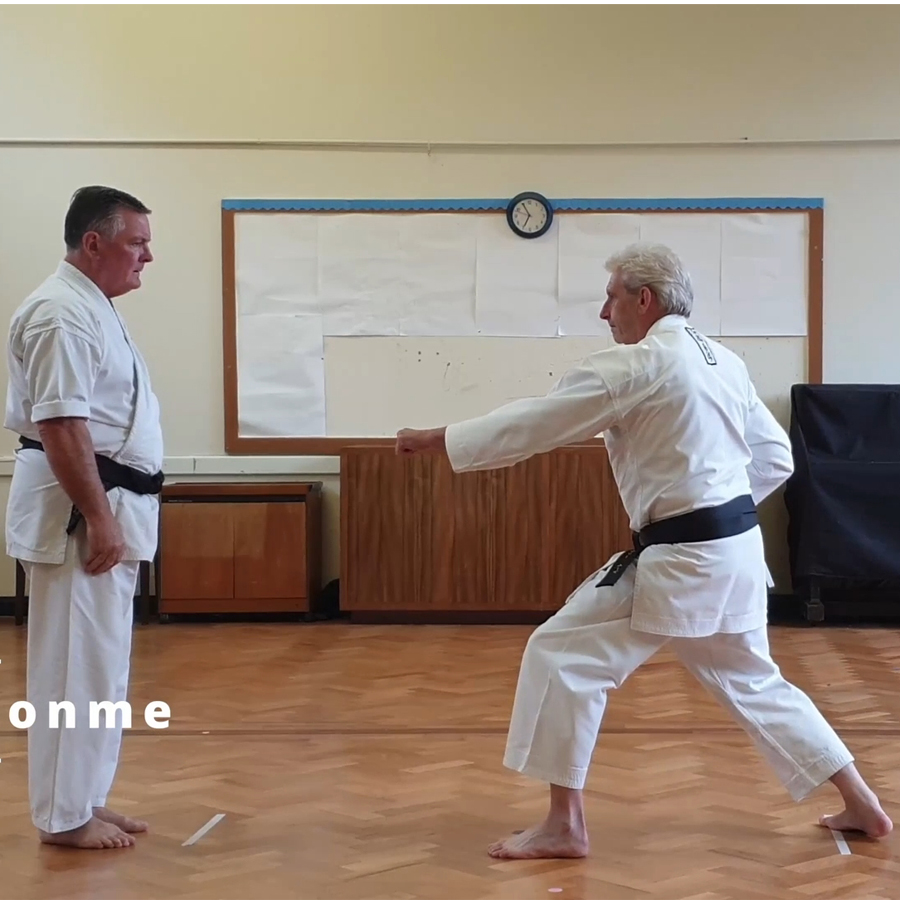
Ippon Kumite No.7 – Nanahonme continues the progression of the Wadō-Ryū syllabus, introducing a more dynamic use of the body through rotation, whipping action, and continuous striking.
Where earlier forms begin to explore control of the centre, Nanahonme develops this further through the generation of power from the hips and the ability to link techniques together without interruption.
“This is relaxed… it’s your body that is guiding you.”
Rather than thinking in separate techniques, this waza should be understood as a single continuous movement — driven by the body, expressed through the arms.
Initial Movement – Off Line and Rotation
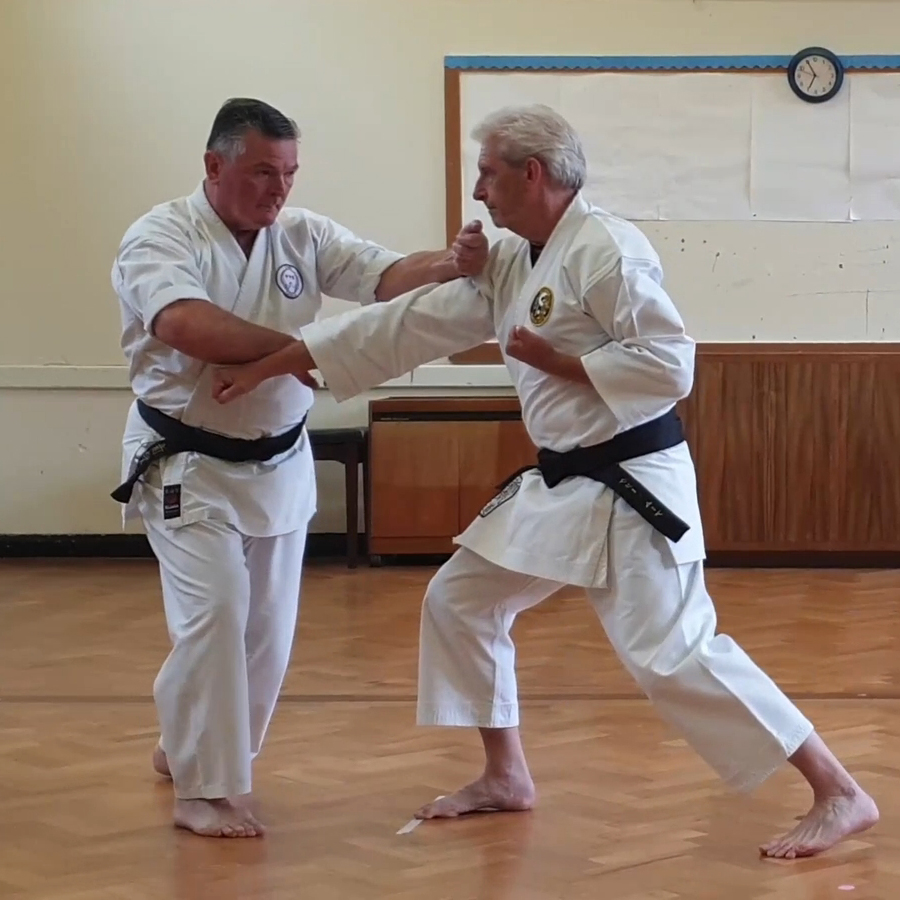
As the attack comes in, the body moves off the line and begins to turn. This is not a rigid block, but a light receiving action — enough to redirect and begin control.
The key is that the movement is relaxed and guided by the body, not forced through the arms.
“Move to the side and turn… this is relaxed.”
Whipping Action – Generating Power
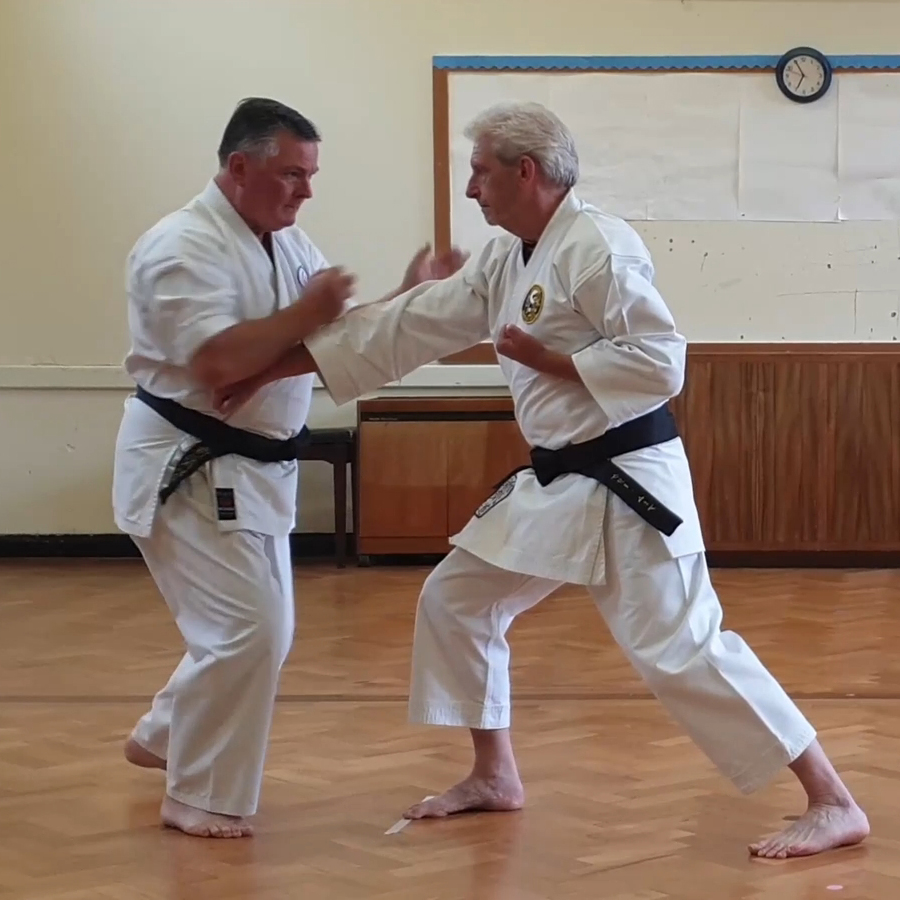
The next phase introduces a distinct whipping action generated from the hips. The strike is not delivered independently — it is the result of rotation.
This creates a natural acceleration, allowing the technique to arrive with speed and structure.
“You need this whipping action… this turn with your hip.”
Following the Arm – Finding the Target
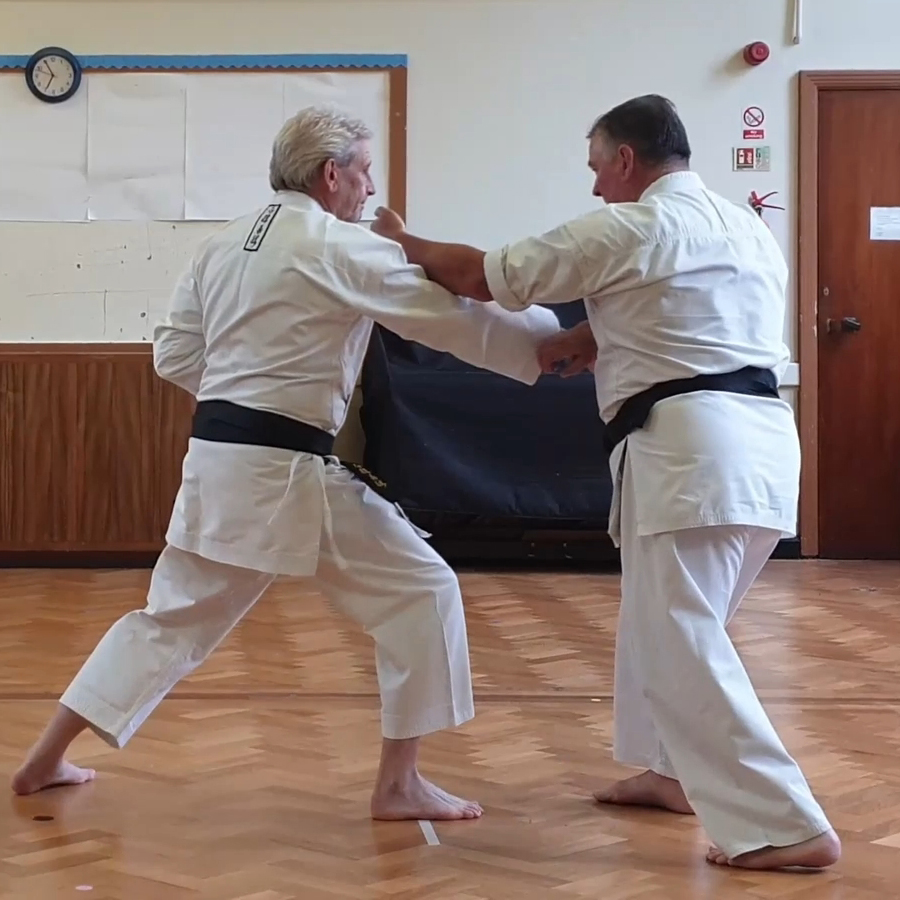
Rather than reaching for a target, the arm follows the contact already established.
This creates a natural path to the head and neck, maintaining connection throughout.
“Don’t try to find it — just follow the arm.”
Continuous Motion – No Pause Between Techniques
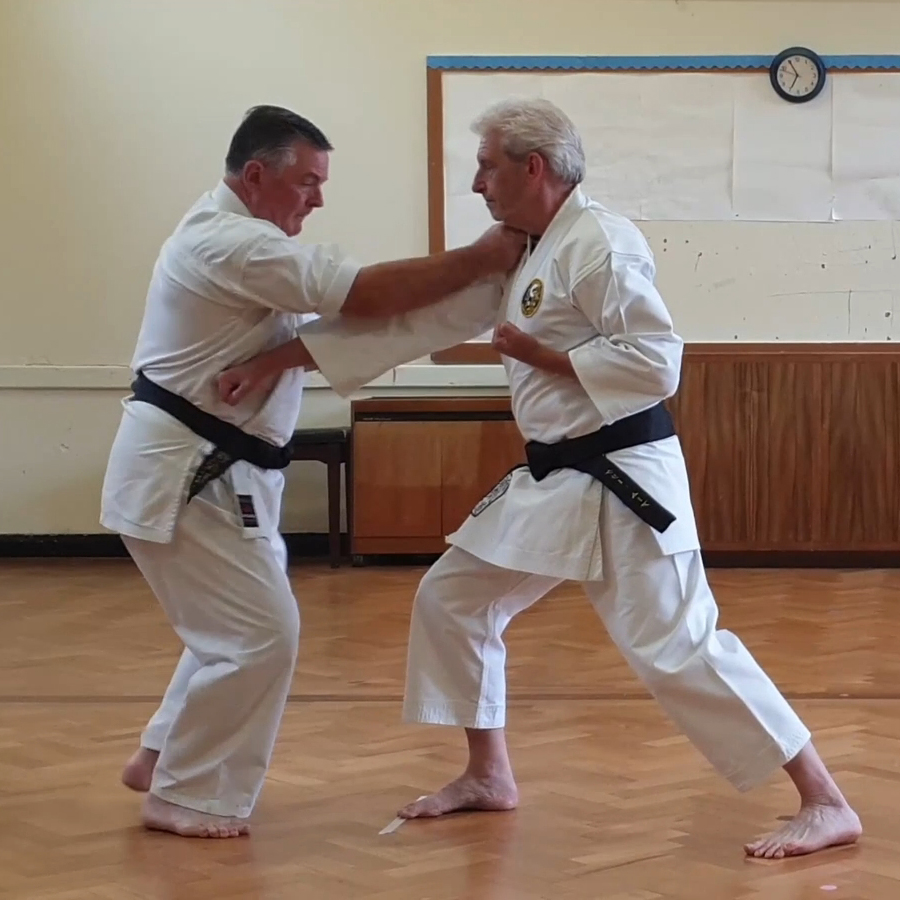
A defining characteristic of Nanahonme is the absence of pause between movements.
Each action feeds the next, creating a continuous cycle of generation and release.
“It’s like winding up a spring… and letting it go again — but don’t stop.”
Re-Generation of Power
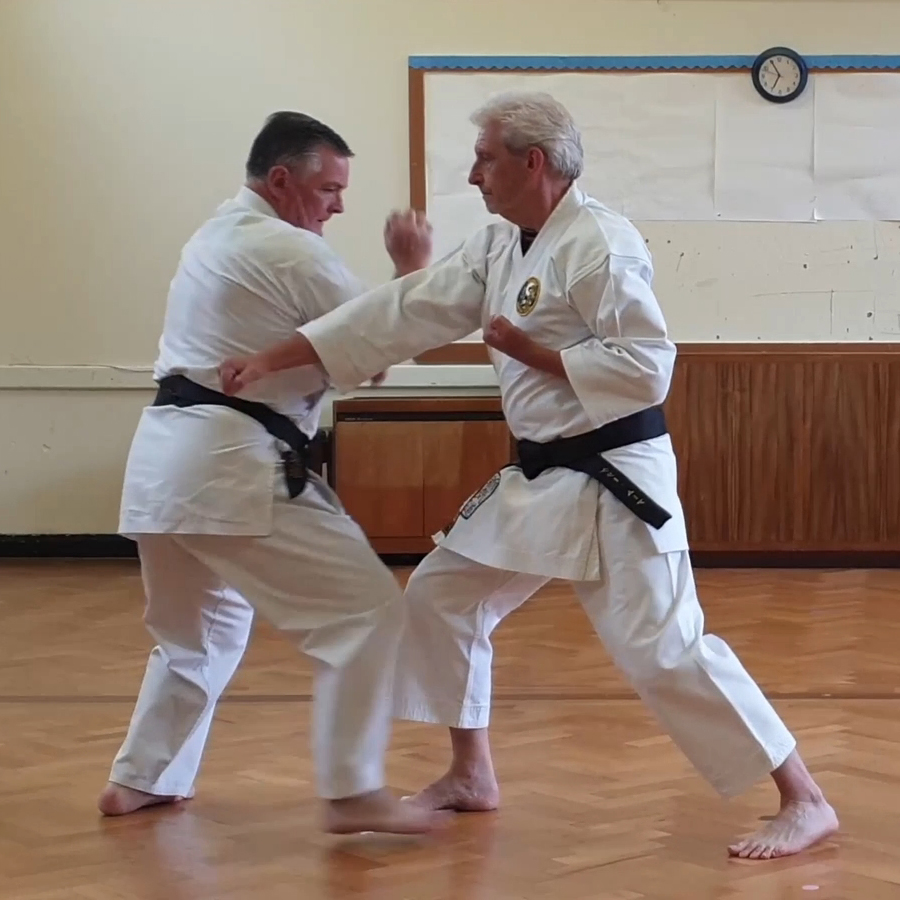
The hip resets and fires again, allowing the second strike to be delivered with equal or greater power.
This creates a rhythm of movement that is both efficient and difficult to counter.
Close Range Control
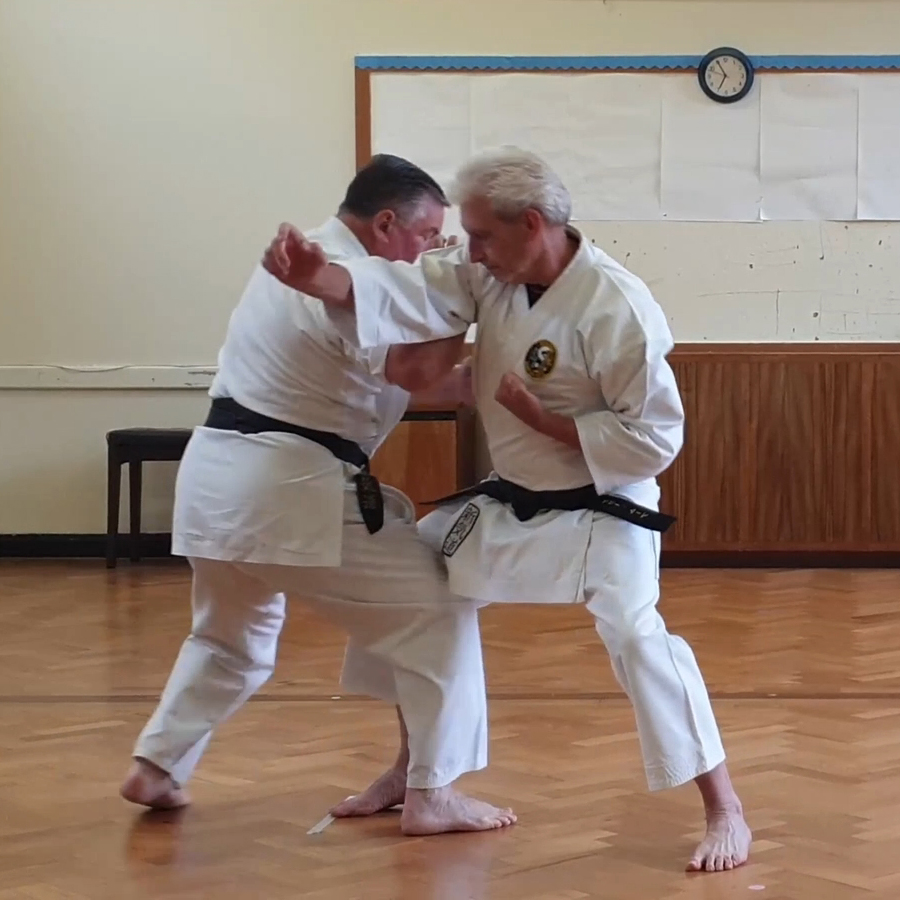
At close range, the emphasis shifts towards control rather than distance striking.
The body closes the space, maintaining pressure and preventing recovery.
Disrupting Structure
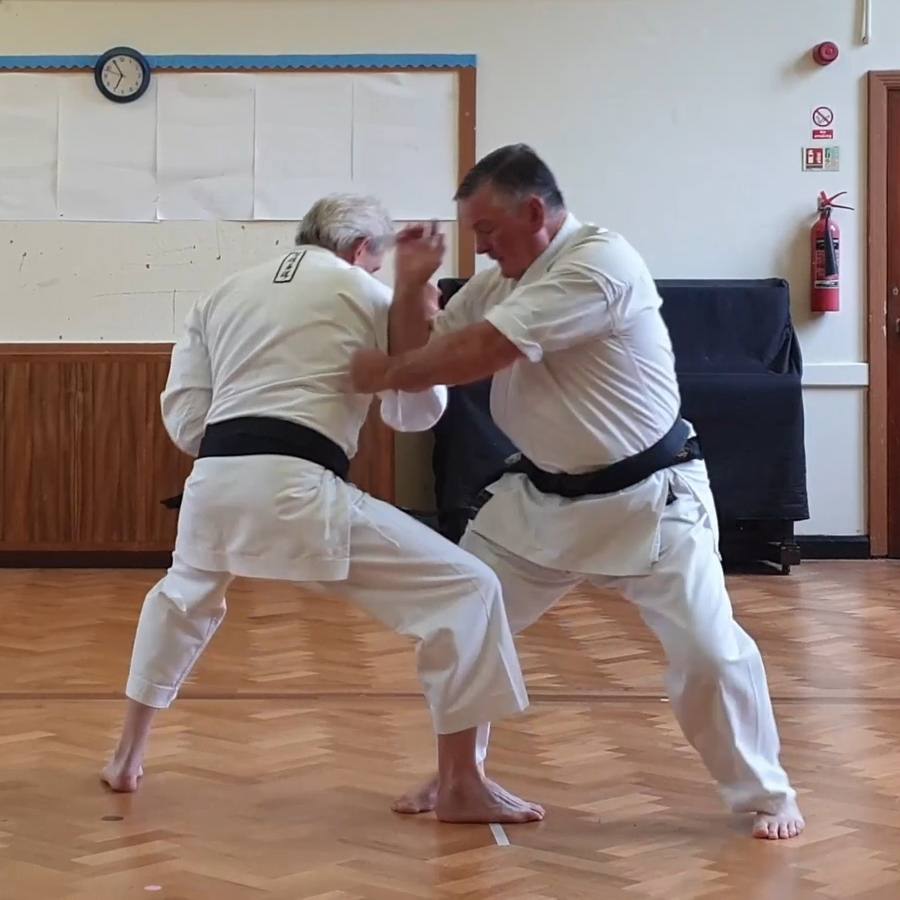
Through connection to the arm and pressure through the body, Uke’s structure begins to break down.
This is subtle, but extremely effective.
“If you can get them just slightly out of their centre… that’s a big point.”
Collapse Through Knee and Body Weight
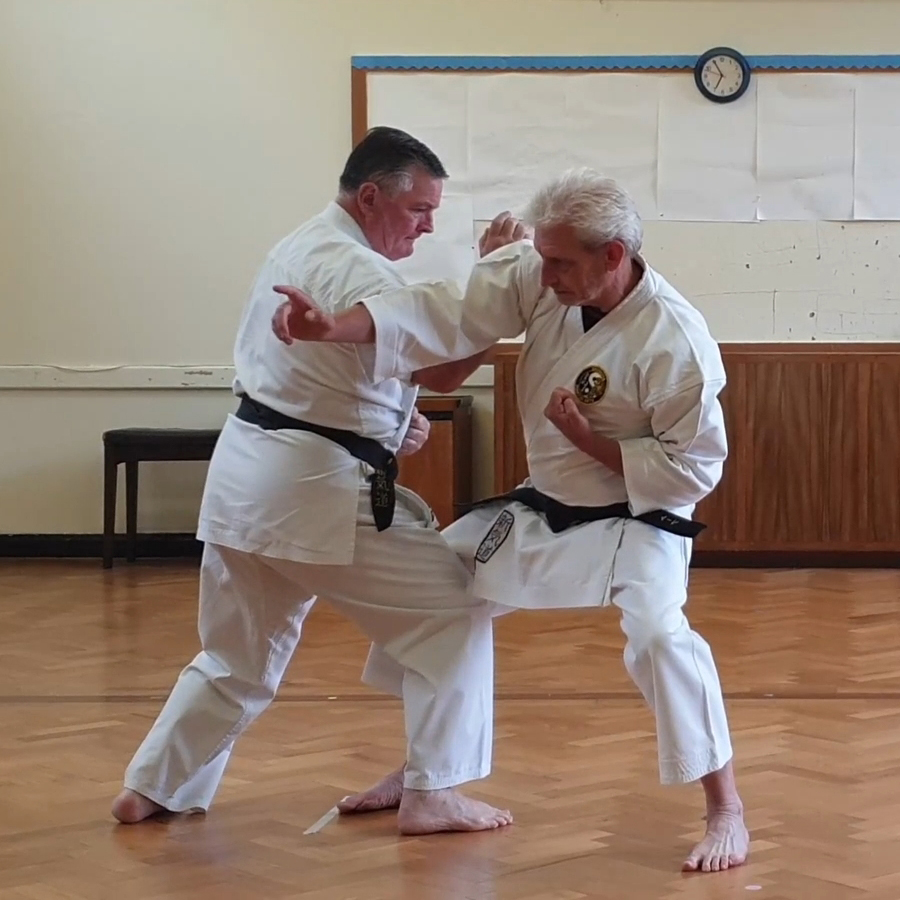
The final phase introduces a dropping of weight through the body and knee.
This creates a collapse in Uke’s stance, making resistance extremely difficult.
Final Control
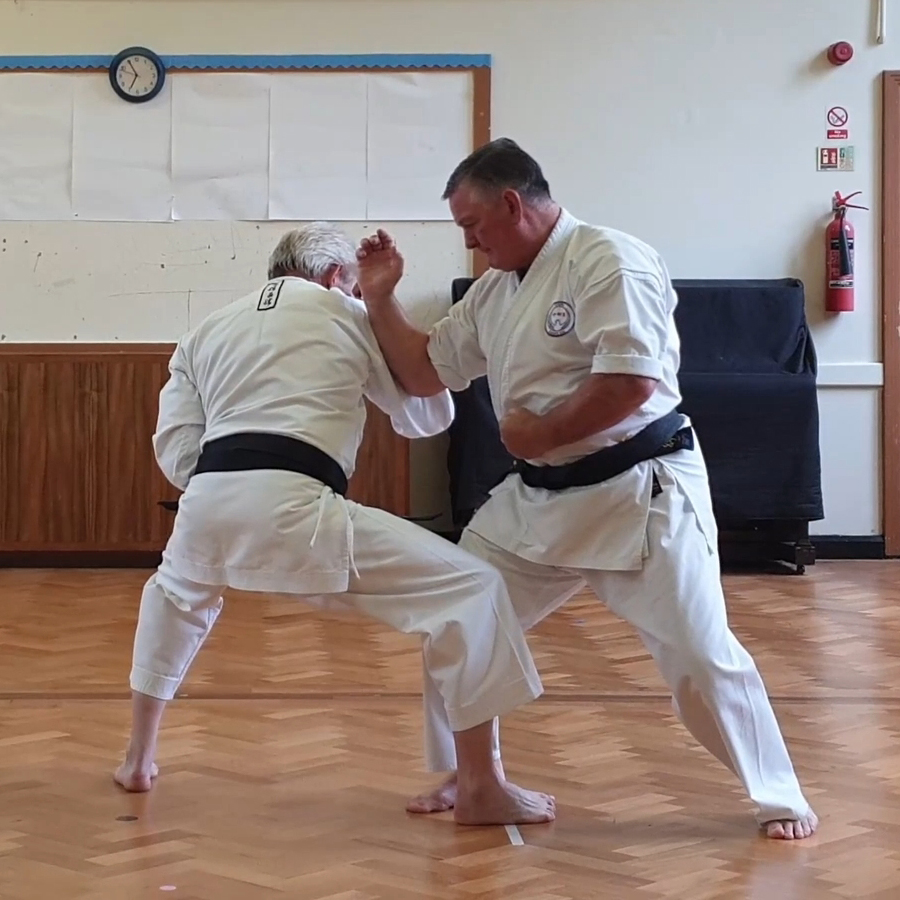
The technique concludes with complete control — not simply through striking, but through the breakdown of posture and balance.
“If you’ve broken their structure… it’s very difficult for them to counter.”
What Uke Should Experience
- Loss of centre through initial redirection
- Whipping impact generated by hip rotation
- Continuous pressure without pause
- Disruption of stance and balance
- Final collapse through body weight and knee pressure
Key Principles
- Movement driven by the body, not the arms
- Continuous generation of power through the hips
- Following contact rather than reaching
- Maintaining flow between techniques
- Breaking structure through connection and weight
Final Thoughts
Nanahonme marks a clear step into more advanced Wadō practice. The emphasis shifts away from isolated techniques towards continuous movement, body connection, and the intelligent use of structure.
It teaches that power is not something added — it is something generated naturally through correct movement.
“Don’t stop… make it one complete movement.”
With careful study, this waza reveals how timing, rotation, and connection combine to create a technique that is both efficient and deeply effective.
📺 Full Breakdown Video
Watch the full breakdown of Ippon Kumite No.7 (Nanahonme)
📅 4. Upcoming Courses, Events, or Updates
Course and events are live on the website events calendar and will be updated regularly so please bookmark it and check it.
Videos from the 3rd May Course will start being released from the 16th May 2026.
🧠 5. Wado Ryu Principle of the Week
Taisabaki (体捌き) — Body Movement and Evasion in Wadō-Ryū
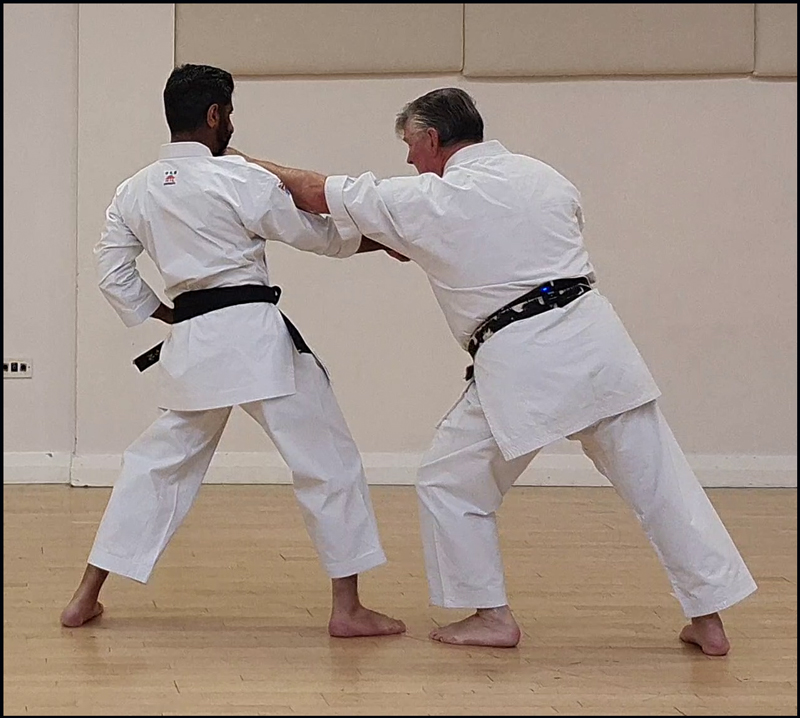
Taisabaki (体捌き) is one of the clearest expressions of what makes Wadō-Ryū distinct. Often translated simply as “body movement” or “body shifting,” the term carries far more depth than a change of position alone. In Wadō, taisabaki is the art of moving the body so that attack is avoided, position is improved, balance is preserved, and opportunity is created — all within the same action.
Without taisabaki, technique quickly becomes hard, linear, and collision-based. The practitioner stays in front of force, tries to oppose it, and ends up relying on strength, speed, or toughness to recover. With correct taisabaki, the body moves in such a way that conflict is reduced before it fully develops. This is why high-level Wadō can appear calm, efficient, and almost effortless: the body is not merely reacting to attack, but reorganising space, angle, and timing in its favour.
What Taisabaki Means in Wadō-Ryū
At its simplest, taisabaki means moving the body appropriately in relation to the opponent. In practice, however, it includes several inseparable qualities:
- evasion — removing the body from the attacking line
- positioning — arriving in a place of advantage
- timing — moving at the correct moment
- continuity — allowing defence, entry, and control to remain connected
For this reason, taisabaki is not a decorative movement added before or after technique. It is the condition that allows the technique to work. The hands may express the result, but the body creates the reality.
More Than Stepping Aside
A common misunderstanding is to think of taisabaki as merely “getting out of the way.” While evasion is certainly part of it, good taisabaki does far more. The movement does not simply escape danger — it simultaneously creates the angle, distance, and alignment from which effective technique can emerge.
In Wadō, this often means that the body moves off the line while at the same time preparing entry. The shift may be small, but its effect is decisive: the opponent loses clear access to your centre while you gain access to theirs.
Why Taisabaki Sits at the Heart of Wadō
Wadō-Ryū is not based on meeting force with force. Its character is shaped by timing, angle, and non-collision. Taisabaki is therefore not one principle among many — it is one of the primary means through which Wadō expresses itself.
When taisabaki is correct:
- Datsuryoku can be maintained because the body is not bracing against impact
- Ryūsui can appear because movement continues without interruption
- Dōjini becomes possible because defence and response happen within the same moment
- Kuzushi develops naturally because position and structure are already being taken
This is why taisabaki links so many other principles together. It is not separate from them; it is one of the ways they are physically expressed.
Key Characteristics of Good Taisabaki
Moving the Centre, Not Just the Feet
Taisabaki is not footwork alone. The feet support it, but the real question is whether the centre has moved. It is entirely possible to take a step and still remain in the line of attack. Correct taisabaki means the whole body has shifted so that the attack no longer finds its intended target.
Economy of Motion
In Wadō, the movement is usually smaller than beginners expect. Large movement often creates delay and exposes intention. Taisabaki should be sufficient, not dramatic — just enough to remove danger and create advantage.
Angle and Line
Good taisabaki changes relationship, not just location. By adjusting the angle, the practitioner moves from a vulnerable line to a stronger one, often taking the outside or inside in a way that weakens the opponent’s structure.
Readiness to Continue
Taisabaki never leaves the body “finished.” The movement must preserve the ability to continue — to strike, enter, control, or flow into the next action without interruption.
Where Taisabaki Appears in Training
Taisabaki is everywhere in Wadō, but it is especially visible in areas where the body must move as one integrated unit:
- Kihon — where line work begins to reveal how posture and movement generate technique
- Kihon Kumite — where moving off line and taking position are essential
- Kumite Kata — where angle, timing, and control become more pronounced
- Kata — where turning, entering, and changing line embody principles rather than choreography
As understanding develops, practitioners begin to see that many techniques once thought of as “blocks” are in fact expressions of taisabaki combined with receiving, entering, and controlling.
Taisabaki and the Opponent’s Balance
One of the most important functions of taisabaki is that it does not only protect the defender — it affects the attacker. When the body moves correctly, the attacker often finds that their line, posture, or balance no longer works in the way they expected.
This is where taisabaki begins to merge with kuzushi. By moving off line while maintaining contact, entering, or adjusting angle, the defender causes the attacker to overextend, twist, settle incorrectly, or become structurally weak. The balance break is not added afterwards. It begins at the moment of movement.
Taisabaki Is Not Running Away
Another common misunderstanding is to think that evasion means retreat. In Wadō, taisabaki is not about escaping engagement and starting again from distance. It is about removing danger while staying connected to the exchange.
Sometimes that means moving slightly away. Often it means moving diagonally, turning, entering, or blending just enough to take the better line. The aim is not absence — it is advantage.
How It Connects to Other Wado Principles
Taisabaki acts as a bridge between many of Wadō’s most important ideas:
- Nagasu / Nagashi — allowing force to pass while guiding it
- Irimi — entering at the correct moment and angle
- Ma-ai — creating and destroying combative distance
- Kōbō-ittai — attack and defence existing as one action
- Ai-nuke — passing without clashing
Because of this, taisabaki is often best understood not as a single technical item, but as a principle that gives life to many others.
Common Misunderstandings
- Taisabaki is not footwork alone
- Taisabaki is not exaggerated circling or theatrical dodging
- Taisabaki is not retreating without purpose
- Taisabaki is not separate from technique
It is body movement that removes danger and creates opportunity in the same moment.
Closing Thoughts
Taisabaki is one of the clearest gateways into understanding Wadō-Ryū properly. Once the body begins to move off line with correct timing, angle, and intention, techniques stop feeling isolated and start becoming connected. Defence no longer needs to be hard. Attack no longer needs to be forced. Control begins to appear through placement, structure, and movement.
In this sense, taisabaki is not simply a method of avoiding attack. It is the means by which Wadō transforms conflict — not by meeting force directly, but by moving the body so well that the need for collision disappears.
🙏 Thank You for Being Part of the Community
If you have any questions, video requests, or feedback, simply contact us here — we read everything.
Wishing you a fantastic week of training,
Roger and The Team
Wado-Ryu Benkyō
https://wadoryubenkyo.co.uk/